
No Products in the Cart

How to Sign a Condolence Card: Sympathy Card Etiquette
|
|
Time to read 10 min
|
|
Time to read 10 min
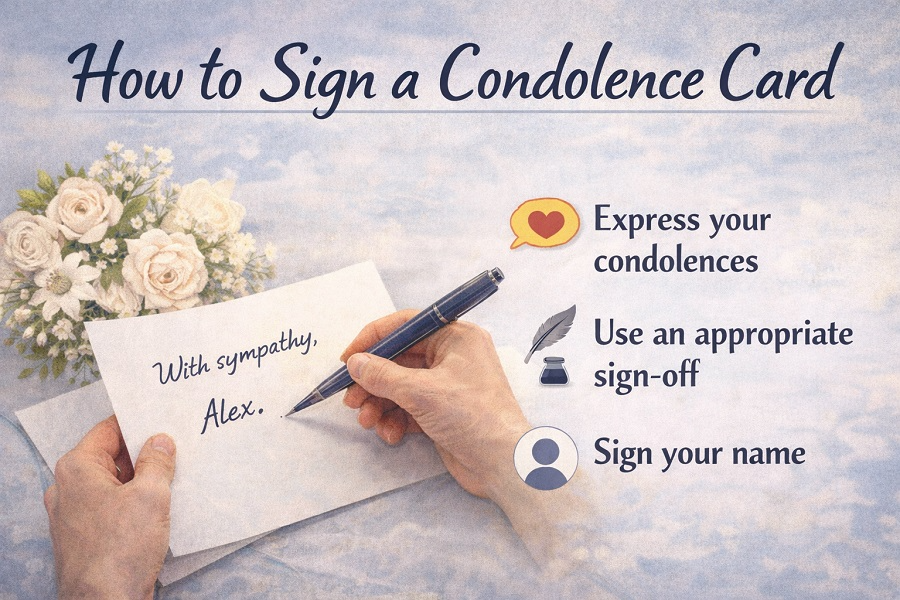
A condolence card can feel small compared to what someone is going through, but during an incredibly challenging time, it often means more than expected. A grieving person may not remember every detail people said, yet sincere condolences in a sympathy card can help them feel supported and less alone. The goal is not to fix the pain. The goal is expressing sympathy in a respectful way that fits the moment.
This guide explains how to sign a condolence card with the right words, right tone, and right balance, even if all that can be written is a simple message. Whether the loss was sudden or unexpected, or followed a long life, these sympathy card etiquette tips help write in a sympathy style that feels warm, sincere, and appropriate.
When someone is in the grieving process, words can land differently than intended. Many people are deeply saddened, overwhelmed, and trying to get through a painful time one hour at a time. The most helpful sympathy message is usually gentle, clear, and supportive, without pressure.
A strong condolence card offers emotional support through care and presence. It can convey sympathy, offer condolences, and remind the recipient that support is available in the days ahead. Even a simple message can bring comfort if it sounds human and sincere. Short condolence messages can still carry heartfelt sympathy when they are written with care.
What to avoid is just as important. Unsolicited advice can feel dismissive, even if it is meant kindly. Trying to explain grief, telling someone “time heals,” or suggesting what they “should” do can become the wrong thing at the wrong time. Instead, focus on heartfelt support, caring thoughts, and a sincere sympathy note that honors the loved one’s life.
If writing feels difficult, follow a simple structure. This method works for sympathy card messages to a family member, a close friend, coworkers, and professional relationships. It also helps keep the right tone when emotions are high.
Start with a short sympathy message
Open with a direct, kind line. This signals sincere sympathy immediately and avoids awkwardness. A short sympathy message also helps find the right words when writing is hard.
Examples that work in most condolence cards:
These are classic because they are clear and respectful. If the loss was a sudden loss or unexpected loss, a straightforward opening often feels safest. The key is to keep the message calm and sincere, not dramatic.
Add one personal line (optional but powerful)
A personal line can turn a sympathy card into something more meaningful. It does not need to be long. It simply helps the recipient feel that the loved one was seen and remembered.
Personal lines can include:
If a specific story comes to mind, keep it short and warm. Mentioning fond memories or cherished memories is often comforting because it honors the loved one’s life. Phrases like “greatly missed” and “deeply missed” can be appropriate when they feel true and not forced.
Offer support in a practical, gentle way
Offering support matters most when it sounds real. Avoid vague promises that cannot be kept. Instead, use a simple line that communicates ongoing support through this difficult time.
Support lines that work:
If faith language is appropriate for the recipient, “sending healing prayers” can feel comforting. If not, choose a neutral line like “thinking of you” or “wishing you peace.” The goal is heartfelt condolences paired with emotional support, without adding pressure.
Close with a caring sign-off and your name
The closing is where many people hesitate, but it can stay simple. Choose a sign-off that matches the relationship and keeps the right sentiment.
Common closings:
Then sign your name. If the recipient is a close friend, a warmer close may feel natural. For professional relationships, choose something respectful like “With sincere sympathy” or “Warmest condolences.” If signing a group sympathy card, include “From all of us at [company/team]” so it feels clear and supportive.
SEE ALSO: How Do You Say Thank You Meaningfully?
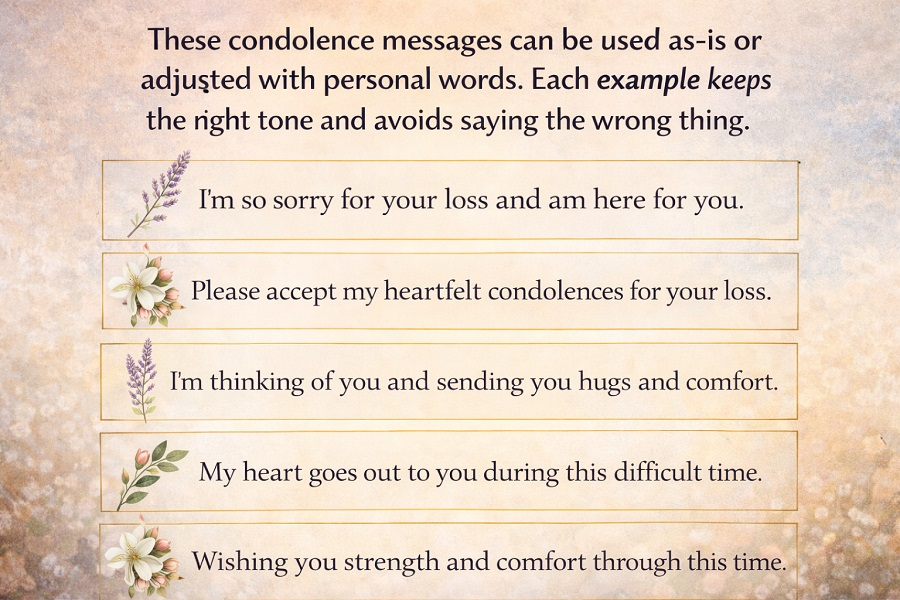
These condolence messages can be used as-is or adjusted with personal words. Each example keeps the right tone and avoids saying the wrong thing.
If writing feels hard, choose one template and add one personal line. Even a simple message can convey sympathy if it is sincere, respectful, and steady.
For close friends or family
For a close friend or a family member, more personal words are appropriate because the relationship is already emotional and familiar. A heartfelt message can mention fond memories, the loved one’s life, or how deeply missed they will be, as long as it feels true and respectful.
A simple structure still works: open with sincere condolences, add one personal line, then offer heartfelt support. If the loss was sudden or unexpected, keep the tone gentle and avoid trying to explain the grieving process. Focus on comfort, not solutions.
Sign in a warm way that matches the bond. Closings like “With heartfelt sympathy” or “Love and support” can fit, followed by your name. If it feels right, include a promise of ongoing support in the days ahead.
For professional relationships
For professional relationships, keep the sympathy message respectful, brief, and sincere. A condolence card in a workplace setting is about conveying sympathy without becoming overly personal or writing too many details.
Use a safe opening like “Please accept my deepest sympathy” or “Warmest condolences,” followed by a short line of support. Avoid unsolicited advice and avoid anything that could be misread as too casual. The right sentiment is calm, caring, and professional.
Close with “With sincere sympathy” or “Warmest regards,” then sign your name (and role or company if appropriate). This keeps the right tone while still offering emotional support.
Group cards and signing on behalf of others
Group sympathy card messages should sound unified and supportive. Use a collective voice like “From all of us at…” and keep the message simple so it represents everyone respectfully.
Mention the entire family or grieving family to widen the support: “Thinking of you and your entire family during this difficult time.” This avoids focusing on one person when multiple people are affected.
End with a clear group sign-off: “With sincere condolences, [Team/Organization Name].” If individuals want to add personal words, they can sign underneath with short, heartfelt notes.

Sympathy for the loss of a mother
Sympathy for the loss of a father
What to write in a sympathy card for the loss of a wife
What to write in a sympathy card for the loss of a husband
What to write in a sympathy card for the loss of a sister

A text message can be appropriate when the loss is sudden, when the grieving person needs immediate emotional support, or when distance makes a condolence card arrive too late. It can also help if the relationship is close and texting is the normal way you communicate.
A condolence card still adds a personal touch because it feels intentional and lasting. A card can be reread during the grieving process, while a text message is easy to lose in a busy inbox. When possible, sending both a text now and a condolence card soon after offers the right balance.
Simple text message template:
“Hi [Name], I’m deeply saddened to hear about your loss. Please accept my sincere condolences. I’m here for you, and I’m thinking of you and your entire family.”
Read the message once for tone and once for clarity. Ask if it feels respectful, if it helps the recipient feel supported, and if it avoids saying the wrong thing. Keep the wording calm and steady, especially during a sudden loss or unexpected loss.
Keep it simple with well chosen words. Avoid unsolicited advice, comparisons, or statements that pressure the grieving person to respond. Even a simple message can convey sympathy when it is sincere and thoughtful.
End with a clear closing like “With sincere sympathy” or “Please accept my deepest condolences,” then sign your name. That small structure helps the sympathy note feel complete and supportive.
How do I sign a sympathy card if I don’t know the right words?
Start with a simple message like “Sorry for your loss” or “Please accept my deepest sympathy,” then add one supportive line such as “I’m here if you need anything.” Keep the tone gentle and sincere. Even a simple message can convey heartfelt condolences when it avoids unsolicited advice and feels respectful.
What should I write in a sympathy card for a sudden or unexpected loss?
For a sudden or unexpected loss, keep the sympathy message short, calm, and supportive. Use phrases like “I’m deeply saddened” and “Please accept my deepest condolences,” then offer emotional support: “Thinking of you and your entire family in the days ahead.” Avoid explanations, comparisons, or advice during this painful time.
How should I sign a sympathy card for professional relationships?
For professional relationships, keep the note brief and formal with sincere sympathy. A safe structure is: one condolence line, one support line, then a respectful closing. Example: “Warmest condolences. Thinking of you during this difficult time. With sincere sympathy, [Name].” Avoid overly personal details to maintain the right sentiment.
Is it okay to send a text message instead of a condolence card?
A text message is appropriate for immediate support, especially if the loss is sudden or distance delays a card. Still, a condolence card adds a personal touch and can be reread during the grieving process. A good approach is texting now with sincere condolences, then sending a sympathy card with a heartfelt message soon after.


Type in words or a phrase to use our AI Assistant to
help generate a great message.


